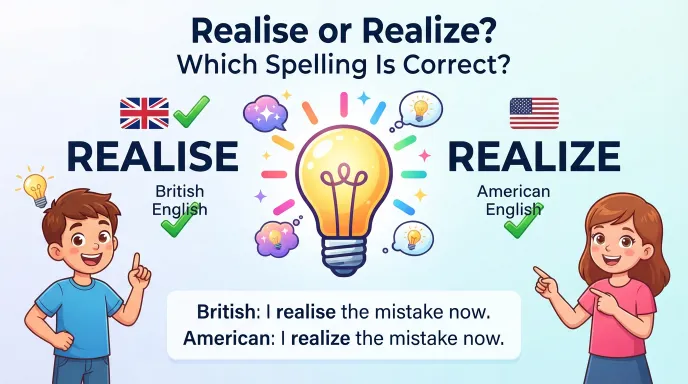
Both “realise” and “realize” are correct; “realise” is more common in British English, while “realize” is more common in American English.
Have you ever wondered if the correct spelling is realise or realize? Both forms are correct, but the preferred spelling depends on the variety of English you use.
This can confuse students, writers, bloggers, and professionals who want their writing to look polished and consistent.
Realise is the traditional and widely preferred spelling in British English, while realize is the standard spelling in American English.
Both words have the same meaning: to become aware of something, understand something, or recognize a fact.
For example, a British writer may say, “I didn’t realise how late it was,” while an American writer may write, “I didn’t realize how late it was.” Neither spelling changes the meaning.
In this guide, you’ll learn the difference between realise and realize, their origin, British and American usage, common mistakes, everyday examples, and which spelling you should choose for your audience.
Realise or Realize : Quick Answer
Both spellings are correct:
- Realise ✅ — Common in British English
- Realize ✅ — Standard in American English
Examples
British English:
I didn’t realise the time.
American English:
I didn’t realize the time.
Quick Tip
-ise = British English
-ize = American English
The Origin of Realise or Realize
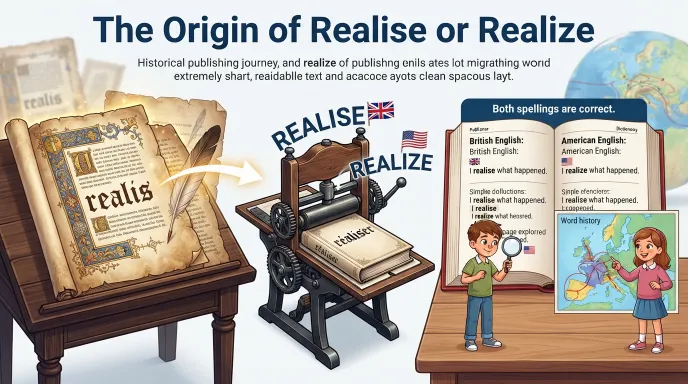
The word realize/realise comes through French from Latin roots related to real and reality.
The spelling with -ize has a long history in English. British English has traditionally used both -ise and -ize, although -ise is very common.
American English generally prefers -ize spellings.
This difference can also appear in other words:
- organise / organize
- recognise / recognize
- apologise / apologize
- analyse / analyze
The meaning stays the same.
British English vs American English Spelling
| Feature | British English | American English |
| Preferred spelling | Realise | Realize |
| Meaning | Become aware | Become aware |
| Common ending | -ise | -ize |
| Example | I realise now. | I realize now. |
British English
She finally realised the truth.
American English
She finally realized the truth.
Which Spelling Should You Use?
Choose the spelling that matches your audience.
Use “Realise” for British English
Use realise if your content follows British English conventions.
Examples:
- I realise my mistake.
- She realised the truth.
- We realise the importance of this issue.
Use “Realize” for American English
Use realize if your content follows American English conventions.
Examples:
- I realize my mistake.
- She realized the truth.
- We realize the importance of this issue.
For Global Websites
Either spelling can work, but consistency matters. If your website mainly uses American English, choose realize. If it follows British English, choose realise.
Common Mistakes with Realise or Realize
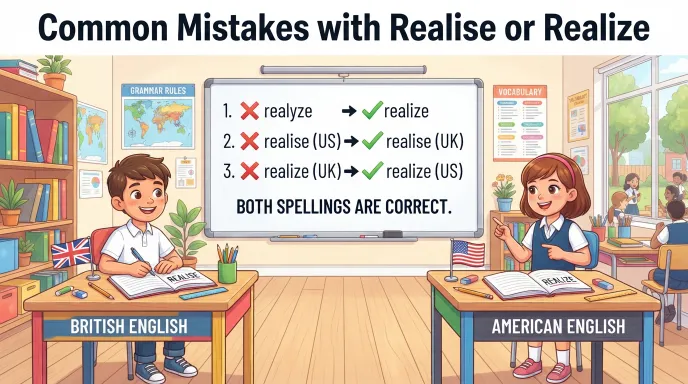
Mixing Both Spellings
❌ I realised that I had made a mistake, but later I realized something else.
✅ I realised that I had made a mistake, but later I realised something else.
Or, in American English:
✅ I realized that I had made a mistake, but later I realized something else.
Assuming One Form Is Wrong
❌ Realise is always incorrect.
❌ Realize is always incorrect.
Both are accepted spellings. The preferred form depends on the English variety and style guide.
Forgetting Related Words
The same regional pattern can appear in related words:
- realise / realize
- realised / realized
- realising / realizing
- realisation / realization
Realise or Realize in Everyday Examples
British:
I realise there has been a delay.
American:
I realize there has been a delay.
News
British:
The company realised that changes were needed.
American:
The company realized that changes were needed.
Social Media
I just realized what happened!
Or:
I just realised what happened!
Formal Writing
British:
The researchers realised that further testing was necessary.
American:
The researchers realized that further testing was necessary.
Realise or Realize : Google Trends & Usage Data
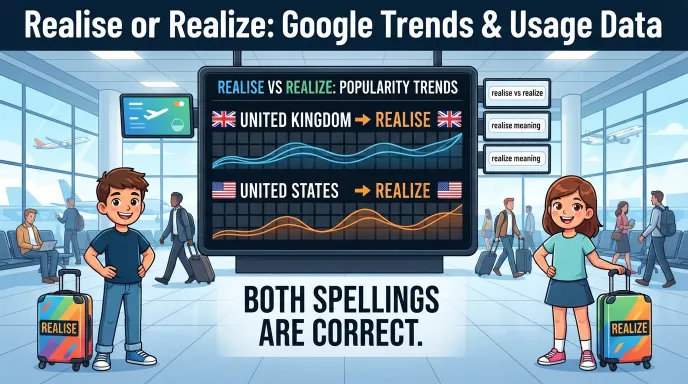
Searches for “realise or realize” are common because both spellings appear in English-language content around the world.
Generally:
- Realize is strongly associated with American English.
- Realise is strongly associated with British English.
- Both forms are understood internationally.
Search interest can vary by country and time, so exact Google Trends results depend on the selected region and date range.
Comparison Table
| Word | British English | American English | Meaning |
| Realise | ✅ Preferred | Less common | Become aware |
| Realize | Accepted in some British styles | ✅ Preferred | Become aware |
| Realised | ✅ Preferred | — | Became aware |
| Realized | — | ✅ Preferred | Became aware |
| Realising | ✅ Preferred | — | Becoming aware |
| Realizing | — | ✅ Preferred | Becoming aware |
FAQs
Is realise or realize correct?
Both are correct. Realise is widely used in British English, while realize is standard in American English.
Is realize American English?
Yes. Realize is the standard spelling in American English.
Is realise British English?
Yes. Realise is a very common British English spelling.
Do realise and realize mean the same thing?
Yes. They have the same meaning and pronunciation.
Which spelling should I use for a US audience?
Use realize.
Which spelling should I use for a UK audience?
Use realise.
Can I use realize in British English?
Yes. The -ize spelling is also accepted in some British English style guides. However, -ise is more common in general British usage.
Conclusion
Both realise and realize are correct English spellings. The main difference is regional preference. Realise is widely preferred in British English.
while realize is the standard form in American English. Both words mean to become aware of, understand, or recognize something.
The most important rule is consistency. If your website, article, or document uses American English, choose realize and related forms such as realized and realizing. If you are following British English, realise, realised, and realising are natural choices.
Neither spelling should be treated as a simple spelling mistake. Instead, think about your audience and the style guide you are following.
A simple memory trick is “-ise for British usage, -ize for American usage.” Once you choose your English variety, use the same style throughout your writing.
DISCOVER MORE ARTICLE HERE!
- Fourty or Forty? Which Spelling Is Correct?
- Cannot or Can Not? Which Spelling Is Correct?
- Noone or No One? Which Spelling Is Correct?

I’m Orin Blake, a writer with a passion for making English grammar simple, practical, and easy to understand. I enjoy breaking down confusing words, spelling differences, and everyday language questions into clear, reader-friendly guides. My goal is to help students, professionals, and curious learners write with greater confidence and accuracy.