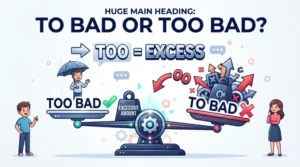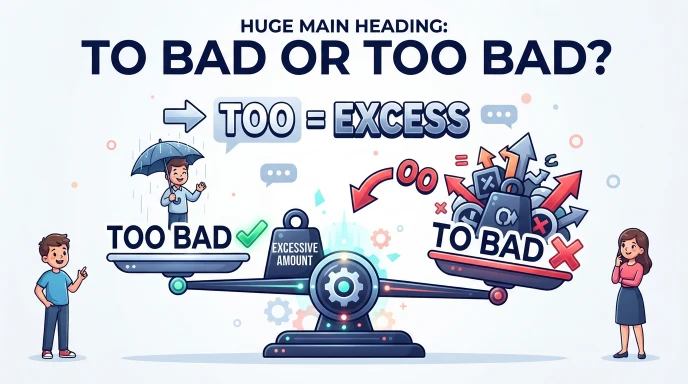
“Too bad” is correct when you mean unfortunate, disappointing, or excessively bad. “To bad” is usually incorrect in this expression.
Quick Answer: To Bad or Too Bad?
The correct phrase is too bad.
- ✅ Too bad — correct
- ❌ To bad — incorrect when expressing disappointment or saying something is unfortunate
Examples:
- Too bad you missed the bus.
- That’s too bad.
- The weather is too bad to go outside.
Definition and Meaning of Too Bad
Too bad has two common meanings.
1. Expressing disappointment
“Too bad” can mean unfortunate or disappointing.
Too bad you couldn’t come.
2. Meaning excessively bad
“Too bad” can also mean something is more bad than acceptable or expected.
The weather is too bad for a picnic.
What does “to” mean?
To is usually a preposition or part of an infinitive.
Examples:
- I went to school.
- I want to learn.
- Give it to him.
It does not work in the expression “to bad.”
The Origin of To Bad and Too Bad
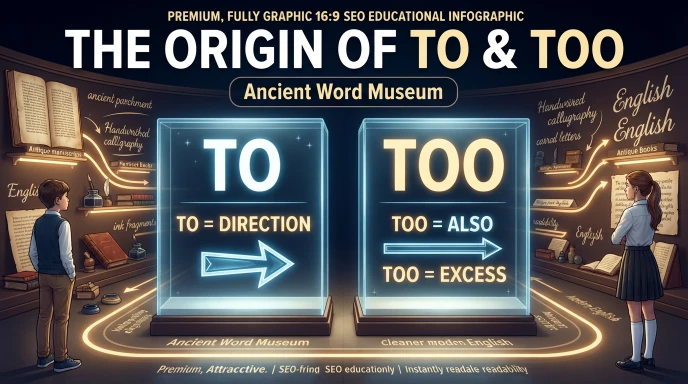
To comes from an old English word used to show direction, movement, or relationships.
Too developed from an Old English word meaning also or excessively. Its meaning later became strongly associated with something being more than needed or desirable.
Although to and too sound alike in many English accents, they have different meanings and spellings.
British English vs American English
| Phrase | British English | American English | Meaning |
| Too bad | ✅ Correct | ✅ Correct | Unfortunate / excessively bad |
| To bad | ❌ Incorrect | ❌ Incorrect | Not correct in this expression |
There is no major British-American spelling difference here. Both varieties use too bad.
Which Version Should You Use?
Use too bad when you want to express disappointment or describe something as excessively bad.
Use “too bad” for disappointment
Too bad you couldn’t stay.
Too bad we missed the train.
Use “too bad” for excessive severity
The weather is too bad for hiking.
The road conditions are too bad to drive safely.
When should you use “to”?
Use to for direction, connection, or infinitive verbs.
We went to the store.
I want to study.
Give the book to Maria.
Common Mistakes with To Bad and Too Bad
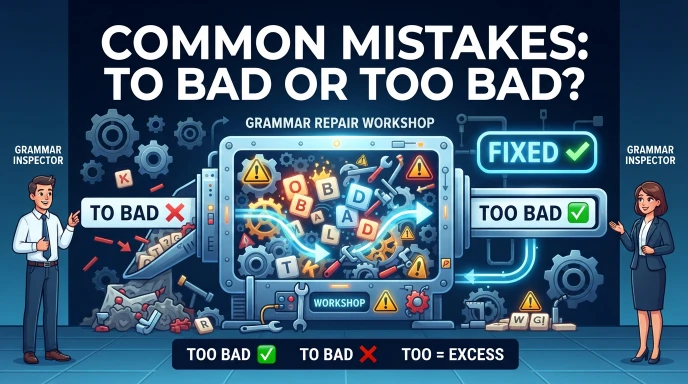
Mistake 1: Writing “to bad”
❌ To bad you missed it.
✅ Too bad you missed it.
Explanation:
The expression meaning “unfortunate” is too bad.
Memory tip:
If you mean unfortunate, use too bad.
Mistake 2: Confusing “too” with “to”
❌ I want too go home.
✅ I want to go home.
Here, to comes before the verb go.
Mistake 3: Forgetting that “too” can mean “excessively”
The coffee is too hot.
Here, too means more than is desirable.
Everyday Examples of Too Bad
In emails
Too bad we couldn’t meet today.
In conversations
“I missed the movie.”
“Too bad!”
On social media
Too bad you missed the event!
In formal writing
For formal writing, alternatives such as unfortunate or regrettable may sound more professional.
It is unfortunate that the meeting was canceled.
How Do You Remember Too Bad?
Use this simple trick:
Too = more than needed / also
To = direction or before a verb
So:
Too bad! ✅
But:
I want to leave. ✅
A quick memory sentence is:
“Too bad” means unfortunate.
To Bad or Too Bad: Google Trends & Usage Data
People commonly search “to bad or too bad” because the words to and too sound alike but have different meanings.
The phrase too bad is the standard expression in English when someone means “unfortunate” or “more bad than acceptable.” Exact search-volume numbers can change over time and by country, so current Google Trends data should be checked for the specific region and date range rather than using invented figures.
Quick Comparison Table
| Word/Phrase | Correct? | Use |
| Too bad | ✅ | Unfortunate or excessively bad |
| To bad | ❌ | Incorrect in this expression |
| To | ✅ | Direction or infinitive |
| Too | ✅ | Excessively or also |
Key Takeaways
- Too bad is the correct expression.
- To bad is incorrect when expressing disappointment.
- Too can mean “excessively” or “also.”
- To is commonly used for direction or before a verb.
- Both British and American English use too bad.
- Example: Too bad you missed the show.
People Also Ask: To Bad or Too Bad
1. Is it “to bad” or “too bad”?
Too bad is correct when you mean unfortunate or excessively bad.
2. Is “to bad” grammatically correct?
Not when used as the expression meaning “unfortunate.” The correct phrase is too bad.
3. Why is “too bad” correct?
Too can describe something as excessive or express disappointment. Therefore, too bad is the standard phrase.
4. What does “too bad” mean?
It can mean unfortunate, disappointing, or excessively bad, depending on context.
5. Can I say “too bad” in a sentence?
Yes. For example: “Too bad you couldn’t come.”
6. Is “too bad” formal English?
Too bad is normal English, especially in conversation. More formal writing may use unfortunate or regrettable.
7. Is “too bad” used in American English?
Yes. Too bad is commonly used in American English.
8. Is “too bad” used in British English?
Yes. British English also uses too bad.
9. What is the difference between “to” and “too”?
To usually shows direction or comes before a verb, while too can mean “also” or “excessively.”
10. Is “That’s too bad” correct?
Yes. “That’s too bad” is a common way to express that something is unfortunate or disappointing.
Conclusion: To Bad or Too Bad?
When you want to say that something is unfortunate or disappointing, too bad is the correct phrase. To bad is not correct in this expression.
Remember that to and too may sound similar, but their meanings are different. To is commonly used for direction or before a verb, while too can mean “excessively” or “also.”
For example, you can say, “Too bad you missed the bus,” but you would write “I want to catch the bus.”
This simple distinction can help you avoid a common spelling mistake in emails, schoolwork, social media posts, and everyday English. If you remember “too bad = unfortunate,” you will usually know which spelling to choose.
DISCOVER MORE ARTICLE HERE!
- Highschool or High School? Which One Is Correct?
- To Late or Too Late? The Correct Spelling(2026)
- Preform or Perform: Which Word Is Correct?(2026)

I’m Orin Blake, a writer with a passion for making English grammar simple, practical, and easy to understand. I enjoy breaking down confusing words, spelling differences, and everyday language questions into clear, reader-friendly guides. My goal is to help students, professionals, and curious learners write with greater confidence and accuracy.