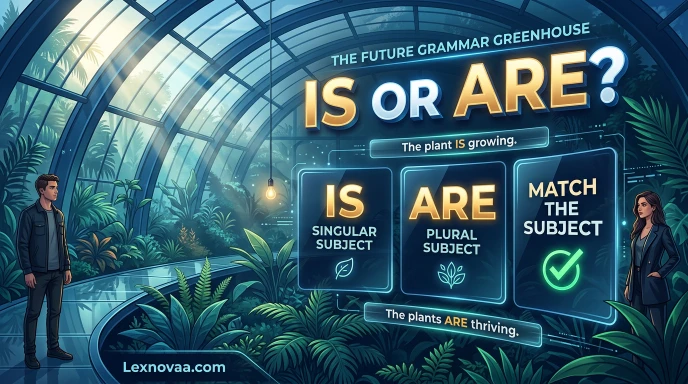
“Is” and “are” are both correct, but the right choice depends on the subject of the sentence. Use “is” with singular subjects and “are” with plural subjects. For example, “She is happy” is correct, while “They are happy” is correct.
Many English learners confuse is and are because both words describe a state, condition, or action in progress.
Choosing the wrong one can make a sentence sound unnatural or grammatically incorrect. The good news is that the rule is simple once you understand how subjects and verbs work together.
In this guide, you will learn when to use is and are, how they differ, and how to avoid common mistakes.
You will also find clear examples, simple grammar rules, and answers to frequently asked questions. if you are writing an email, completing schoolwork, or speaking English every day, this guide will help you choose the correct word with confidence.
Is or Are : Quick Answer
Use is with a singular subject and are with a plural subject. The subject is the person, place, thing, or idea that the sentence is about.
- Is: He is busy.
- Are: They are busy.
- Is: The book is interesting.
- Are: The books are interesting.
Remember that I takes am, not is or are, in standard present-tense sentences: “I am ready.”
Definition and Meaning
What Does “Is” Mean?
Is is a present-tense form of the verb be. It is usually used with singular third-person subjects, such as he, she, it, or a singular noun.
Examples:
- She is a teacher.
- The dog is sleeping.
- My phone is new.
- It is cold today.
In these sentences, is connects the subject to information about it or helps form a continuous verb phrase, such as “is sleeping.”
What Does “Are” Mean?
Are is also a present-tense form of the verb be. It is used with you, we, they, and plural nouns.
Examples:
- You are kind.
- We are ready.
- They are playing outside.
- The children are happy.
Both words can connect a subject to a description or help form a continuous verb phrase. The main difference is the subject they are used with.
The Origin of “Is” or “Are”

The words is and are come from the verb be, one of the oldest and most irregular verbs in English. Forms of this verb developed from different roots in early Germanic languages and became part of English over many centuries.
Because the verb be is irregular, its forms do not follow one simple pattern. In the present tense, we say:
- I am
- You are
- He is
- She is
- It is
- We are
- They are
These different forms help show who or what the sentence is about. Learning them as a group makes it easier to use is and are correctly.
Is vs. Are: British English vs. American English
The basic rules for is and are are the same in British and American English. Both varieties use is with singular subjects and are with plural subjects.
| Example | American English | British English |
| The student ___ ready. | The student is ready. | The student is ready. |
| The students ___ ready. | The students are ready. | The students are ready. |
| You ___ welcome. | You are welcome. | You are welcome. |
| The team ___ playing. | The team is playing. | The team is playing. |
One difference can appear with collective nouns, such as team, family, or staff. American English often treats these nouns as singular when the group acts as one unit. British English more readily allows plural agreement when the writer focuses on the individual members.
For example:
- American English: The team is playing well.
- British English: The team are playing well.
This variation concerns how a collective noun is understood. It does not change the basic rule for ordinary singular and plural nouns.
Which Word Should You Use: Is or Are?
Choose the word by identifying the subject of your sentence.
Use “Is” With Singular Subjects
Use is when the subject refers to one person, thing, or idea, particularly with he, she, and it.
Examples:
- The baby is asleep.
- My sister is at school.
- The answer is correct.
- This room is clean.
Use “Are” With Plural Subjects
Use are when the subject refers to more than one person or thing. It also follows you, even when you are speaking to one person.
Examples:
- The babies are asleep.
- My sisters are at school.
- The answers are correct.
- You are very helpful.
Remember the Special Case: “You Are”
Even when you refers to only one person, the correct form is you are.
Correct: You are my friend.
Incorrect: You is my friend.
This rule applies in both British and American English.
What About “There Is” and “There Are”?
Use there is for a singular noun and there are for plural nouns.
- There is a pencil on the desk.
- There are three pencils on the desk.
- There is a problem with my computer.
- There are several problems with my computer.
In these sentences, look at the noun that follows the phrase to help you choose the correct form.
Common Mistakes With Is or Are
Even fluent English speakers can make mistakes when the subject is far from the verb or when a sentence contains extra words.
| Incorrect | Correct | Explanation |
| She are happy. | She is happy. | “She” is singular. |
| They is ready. | They are ready. | “They” takes “are.” |
| You is welcome. | You are welcome. | “You” always takes “are” in the present tense. |
| The books is new. | The books are new. | “Books” is plural. |
| There is two chairs. | There are two chairs. | “Two chairs” is plural. |
| My friends is here. | My friends are here. | “Friends” is plural. |
| The list of names are long. | The list of names is long. | The main subject is “list,” not “names.” |
| Everyone are invited. | Everyone is invited. | “Everyone” is grammatically singular. |
How to Avoid These Mistakes
First, find the main subject. Do not let nearby words confuse you. For example, in “The box of toys is heavy,” the subject is box, not toys. Since box is singular, use is.
Second, memorize the special forms: I am, you are, he is, she is, it is, we are, and they are.
Finally, read your sentence aloud. Checking if the subject and verb agree can help you spot errors before you finish writing.
Everyday Examples of Is and Are

Here are examples from daily conversations, schoolwork, emails, and professional writing.
Everyday Conversations
- Is your brother home?
- Are you feeling better?
- My favorite movie is funny.
- The shops are busy today.
Schoolwork
- The answer is correct.
- These questions are difficult.
- The lesson is easy to understand.
- The students are working quietly.
Emails and Messages
- The meeting is scheduled for Monday.
- The documents are attached.
- Your order is ready.
- The requested changes are complete.
News and Formal Writing
- The new policy is effective today.
- The results are available online.
- The report is under review.
- The changes are important for local businesses.
These examples show that is and are work in many settings. The same subject-verb agreement rule applies if you are chatting with a friend or writing a formal report.
Is or Are: Quick Comparison
| Rule | Use “Is” | Use “Are” |
| Singular noun | The cat is hungry. | — |
| Plural noun | — | The cats are hungry. |
| Pronoun | He is ready. | They are ready. |
| Demonstrative | This is mine. | These are mine. |
| There is / are | There is one chair. | There are two chairs. |
| Continuous tense | She is reading. | They are reading. |
Easy memory tip: One person or thing usually takes is. More than one usually takes are. Remember that you takes are, and I takes am.
Is or Are: Google Trends and Modern Usage
The terms is and are are among the most common words in everyday English. People use them in conversations, emails, books, news reports, online searches, and social media posts.
However, the fact that one form appears more often does not mean it is always the correct choice. The correct form depends on the subject and the meaning of the sentence.
For example, “The answer is clear” and “The answers are clear” are both correct. The choice changes because the subject changes from singular to plural.
No specific Google Trends figures are included here because current data has not been verified for this article. To compare search interest, you can explore the terms using Google Trends.
Is or Are?
Is or are: Which is correct?
Both is and are are correct forms of the verb be. Use is with singular subjects, such as he, she, it, and singular nouns. Use are with plural subjects, you, we, and they. For example, “The child is happy” and “The children are happy.” Use am with I.
FAQs
1. Should I use “is” or “are”?
Use is with singular subjects and are with plural subjects. For example, “The room is clean” and “The rooms are clean.”
2. Is “you is” ever correct?
In standard English, “you is” is not grammatically correct. Use “you are,” if you are speaking to one person or several people.
3. Is it “there is” or “there are”?
Use there is before a singular noun and there are before plural nouns. Say “There is a book” but “There are two books.”
4. Is “everyone is” or “everyone are” correct?
“Everyone is” is correct in standard English because everyone is grammatically singular. For example, “Everyone is welcome.”
5. Is it “the team is” or “the team are”?
Both can be correct, depending on the variety of English and the intended meaning. American English usually uses “the team is” when the team acts as one unit. British English may use “the team are” when focusing on its members.
6. Should I say “these is” or “these are”?
Say “these are.” The word these refers to more than one person or thing. For example, “These are my books.”
7. Is it “the information is” or “the information are”?
“The information is” is correct because information is an uncountable noun in standard English. For example, “The information is useful.”
8. Is “my family is” or “my family are” correct?
Both forms may be used. “My family is” treats the family as one unit and is common in American English. “My family are” is also possible in British English when focusing on individual family members.
9. How do I teach children the difference between is and are?
Start with simple pairs: “The dog is running” and “The dogs are running.” Explain that one dog takes is, while multiple dogs take are. Then practise with names, objects, and pronouns.
10. What is the easiest way to remember is and are?
Remember this simple pattern: he is, she is, it is; you are, we are, they are. Use am with I. Practising these forms in short sentences will make them easier to remember.
Key Takeaways
- Is is generally used with singular third-person subjects.
- Are is used with plural subjects and with you, we, and they.
- Am is used with I.
- Use “there is” for singular nouns and “there are” for plural nouns.
- Words such as everyone and information take singular agreement in standard English.
- Collective nouns such as team and family can vary between British and American English.
- Always identify the main subject before choosing the verb.
Conclusion
Understanding the difference between is and are can make your English clearer and more natural. Both words are correct, but each has a different role.
Use is with singular third-person subjects, such as “he,” “she,” “it,” and singular nouns. Use are with plural nouns and pronouns such as “you,” “we,” and “they.” Remember that I takes am.
The easiest way to avoid mistakes is to find the main subject of your sentence before choosing the verb. Do not let extra words between the subject and verb confuse you.
For example, “The basket of apples is full” is correct because the main subject is basket. With practice, these simple rules will become easier to apply in conversations, school assignments, emails, and formal writing.
Keep practising with short examples, and check your sentences whenever you are unsure. For more clear explanations of confusing English words and grammar rules, visit Lexnovaa.com
DISCOVER MORE ARTICLE HERE!
- That or Which: Which Word Is Correct?
- Piece of Mind or Peace of Mind: Which Phrase Is Correct?
- Followup or Follow Up: Which Spelling Is Correct?

I’m Orin Blake, a writer with a passion for making English grammar simple, practical, and easy to understand. I enjoy breaking down confusing words, spelling differences, and everyday language questions into clear, reader-friendly guides. My goal is to help students, professionals, and curious learners write with greater confidence and accuracy.