Have you ever wondered if to write steel or steal? These words sound exactly the same, but they have very different meanings.
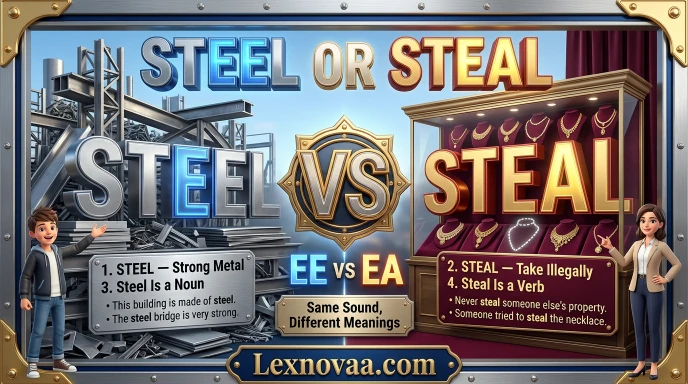
Steel is a strong metal used to make tools, buildings, and machines. Steal is a verb that means to take something that belongs to another person without permission.
The confusion happens because steel and steal are homophones. Homophones are words that have the same pronunciation but different meanings and spellings. This makes them easy to mix up, especially when writing quickly or learning English.
Although both words sound alike, you cannot use them in the same way. Choosing the wrong one can change the meaning of your sentence.
For example, “The worker used steel” describes a material, while “The worker tried to steal” describes an action.
In this guide, you will learn the meaning, spelling, pronunciation, and origin of both words. You will also find practical examples, common mistakes, and simple memory tips to help you choose the right word every time.
Steel or Steal: What Is the Difference?
Steel is a noun that refers to a strong metal made mainly from iron and carbon. Steal is a verb that means to take something without permission.
Both words sound the same, but their meanings and uses are different. For example, a builder uses steel to construct a building, while someone might steal a bicycle.
Steel or Steal: Quick Answer
Use steel when talking about the metal used in construction, tools, vehicles, and other products. Use steal when describing the act of taking something without permission.
- Steel: A strong metal. Example: The bridge is made of steel.
- Steal: To take something unlawfully or without permission. Example: Never steal someone else’s property.
Easy rule: Steel is a material; steal is an action.
What Does Steel or Steal Mean?
Although steel and steal have the same pronunciation, they belong to different word categories and serve different purposes.
Let’s look at each word in detail.
What Does Steel Mean?
Steel is a strong metal made mainly from iron and carbon. Other elements may also be added to give it special properties, such as greater strength, hardness, or resistance to corrosion.
widely used in construction, manufacturing, transportation, and everyday products.
as a noun:
- The building has a steel frame.
- This knife is made of stainless steel.
- The company produces steel for construction projects.
can also appear in expressions such as:
- Steel industry: The industry that produces steel.
- Steel structure: A structure made with steel components.
- Stainless steel: Steel designed to resist rust and corrosion.
as a verb:
can also mean to make yourself mentally or emotionally ready to face something difficult. This use is often found in the expression steel yourself.
Examples:
- She steeled herself for the difficult conversation.
- He tried to steel himself before the interview.
This meaning is less common than the noun meaning, but it is still correct.
What Does Steal Mean?
Steal is a verb that means to take something that belongs to another person without their permission. It can describe an unlawful act or an action that violates someone’s ownership.
Examples:
- Someone tried to steal my phone.
- It is wrong to steal money.
- The thief attempted to steal a car.
The word steal also appears in informal expressions.
For example:
- A steal: Something bought at a very low or surprisingly good price.
- Steal the show: To attract the most attention or receive the most praise.
- Steal someone’s heart: To make someone feel strong affection. This is an idiom, not a literal act of taking property.
Examples:
- This jacket was a steal at that price.
- The young actor stole the show.
- Her kindness stole everyone’s heart.
Steel vs Steal: Parts of Speech
Understanding the parts of speech makes the difference easier to remember.
| Word | Part of Speech | Meaning | Example |
| Steel | Noun | A strong metal | The gate is made of steel. |
| Steel | Verb | To prepare yourself mentally | She steeled herself for the news. |
| Steal | Verb | To take something without permission | Do not steal other people’s belongings. |
| Steal | Noun | An unusually good bargain, informal | That laptop was a steal. |
Important: Steel is most often used as a noun, while steal is most often used as a verb.
The Origin of Steel and Steal
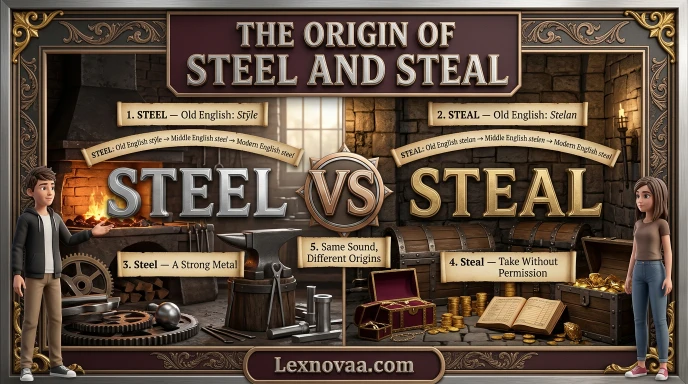
The words steel and steal have different histories. Their similar pronunciation does not mean they share the same origin or meaning.
Origin of Steel
The word steel comes from Old English stȳle, which referred to the strong metal. Its history is connected to older Germanic words for steel.
Over time, the word developed into its modern spelling and meaning. Steel became especially important as metalworking improved and people found more ways to use it in tools, buildings, machines, and transportation.
Today, the word refers mainly to the widely used metal alloy made from iron and carbon.
Origin of Steal
The word steal comes from Old English stelan, meaning to take secretly or without permission.
It developed from older Germanic language forms and has kept its central meaning over time. Today, it describes taking something that belongs to someone else without permission.
The word also appears in many expressions, such as steal the show and a steal, where its meaning is figurative rather than literal.
Why Are Steel and Steal Spelled Differently?
English spelling reflects the history of words, not just their pronunciation.
Although steel and steal sound alike, they developed from different older words. Their spellings help distinguish their meanings in writing.
A useful way to remember the difference is:
- Steel: Think of metal, tools, and buildings.
- Steal: Think of taking something without permission.
British English vs American English
There is no spelling difference between British and American English for steel and steal. Both words have the same spelling and meaning in major English varieties.
| British English | American English | Example |
| Steel | Steel | The company uses steel to make machinery. |
| Steal | Steal | Someone tried to steal a bicycle. |
| Steeled | Steeled | She steeled herself for the challenge. |
| Stole | Stole | He stole a book from the shop. |
| Stolen | Stolen | The stolen car was recovered. |
| Stealing | Stealing | Stealing is against the law. |
Are There Any Regional Differences?
No major regional spelling differences exist between these words.
- British English: Uses steel and steal.
- American English: Uses steel and steal.
- Canadian English: Uses steel and steal.
- Australian English: Uses steel and steal.
- International English: Uses both spellings in the same way.
Style guides may differ in punctuation, capitalization, or other regional spelling choices. However, they do not normally offer different spellings for steel and steal.
Which Version Should You Use?
You do not need to choose a British or American version. Both words are correct, but you must select the one that matches your intended meaning.
United States
American English uses both words.
- Use steel for the metal.
- Use steal for taking something without permission.
Example: The factory uses steel to build equipment, but workers must never steal company property.
United Kingdom
British English follows the same distinction.
Example: The new bridge contains a large amount of steel.
Example: The police investigated an attempt to steal a vehicle.
Canada
Canadian English uses both words with the same meanings.
Example: The manufacturer produces steel parts for cars.
Australia
Australian English also uses steel and steal in the same way.
Example: The company ordered steel for its new building.
International Writing
If you write for an international audience, both words are widely understood. Focus on choosing the correct meaning rather than changing the spelling.
Academic Writing
Use steel when discussing materials, engineering, construction, or manufacturing. Use steal when discussing theft, crime, or figurative expressions.
Examples:
- Steel is commonly used in modern construction.
- The study examines factors linked to vehicle theft.
Business Writing
Use steel in documents about products, factories, materials, and construction. Use steal when describing theft or when using an informal expression such as a steal.
Examples:
- Our company supplies high-quality steel.
- The business reported that equipment had been stolen.
Common Mistakes When Using Steel and Steal
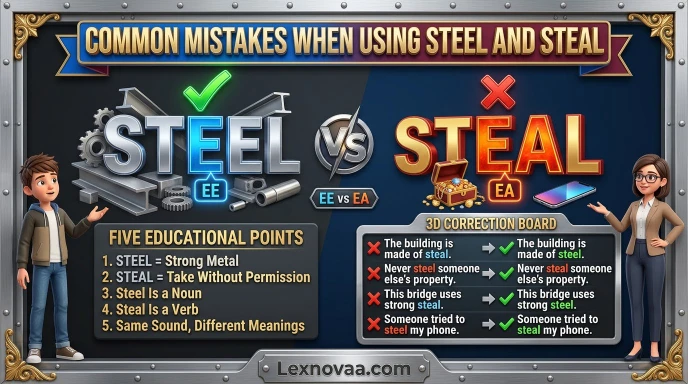
The most common mistake is choosing the wrong word because both have the same pronunciation.
Here are examples that show how to use them correctly.
| Incorrect Sentence | Correct Sentence | Explanation |
| The building is made of steal. | The building is made of steel. | Steel is the metal. |
| Someone tried to steel my phone. | Someone tried to steal my phone. | Steal means to take without permission. |
| This knife is made of steal. | This knife is made of steel. | Steel is a material. |
| He wants to steel the money. | He wants to steal the money. | Steal describes the action. |
| The company produces steal products. | The company produces steel products. | Steel is used to make products. |
Mistake 1: Using Steal for the Metal
Incorrect: The workers used steal to build the bridge.
Correct: The workers used steel to build the bridge.
Why? The sentence describes a construction material. Therefore, steel is the correct word.
Mistake 2: Using Steel for Theft
Incorrect: Someone tried to steel my wallet.
Correct: Someone tried to steal my wallet.
Why? The sentence describes taking something without permission. Use steal.
Mistake 3: Confusing Their Related Forms
The words also have different past and participle forms.
| Base Word | Past Tense | Past Participle | -ing Form |
| Steel | Steeled | Steeled | Steeling |
| Steal | Stole | Stolen | Stealing |
Examples:
- She steeled herself for the challenge.
- He stole a bicycle.
- The money was stolen.
- Someone is stealing the equipment.
Do not write stealed as the usual past tense of steal. The correct form is stole.
Easy Memory Tips
Try these simple tricks:
- Steel has two e’s: Think of the metal used in buildings and tools.
- Steal has an a: Think of taking something away.
- Remember this sentence: “Steel is strong, but stealing is wrong.”
- Check the sentence meaning before choosing either word.
These tips can help you avoid spelling mistakes in schoolwork, emails, and everyday writing.
Everyday Examples of Steel and Steal
Both words appear in many situations. The examples below show how they work in different types of writing.
1. Emails
Steel:
- Please confirm the delivery date for the steel materials.
- We need a new supplier for stainless steel parts.
Steal:
- Please report any attempt to steal company property.
- The missing equipment was reported as stolen.
2. Business Writing
Steel:
- The company manufactures steel products for the construction industry.
- Rising steel costs affected the project budget.
Steal:
- The business introduced new measures to prevent employees from stealing goods.
- The company reported that some equipment had been stolen.
3. News Headlines
- Steel Prices Rise as Construction Demand Grows
- Police Investigate Attempt to Steal a Vehicle
- New Steel Plant Opens for Production
- Officials Search for Suspects in Major Theft Case
4. Blogs
- Why Steel Is Important in Modern Construction
- How to Choose the Right Stainless Steel Products
- Simple Ways to Protect Your Belongings from Theft
- Why Some Products Feel Like a Steal
5. Social Media
- Strong foundations begin with quality steel.
- Never steal someone else’s ideas.
- This deal is a steal!
- Learning the difference between steel and steal makes English easier.
6. Academic Writing
Steel:
- Steel is an important material in civil engineering.
- The research compares the strength of different steel alloys.
Steal:
- The paper examines the social causes of theft.
- The study discusses factors that may influence stealing behavior.
7. Daily Conversation
- Is this tool made of steel?
- Did someone steal your bag?
- That price is a steal!
- The building uses steel beams.
- Why would anyone steal a bicycle?
These examples show that the right word depends on the meaning of the sentence, not the way it sounds.
Google Trends & Modern Usage
People search for steel or steal because the two words sound identical. This makes them a common source of confusion for students, English learners, and writers.
Both words are used regularly in modern English, but they appear in different contexts.
Why Do People Search for Steel or Steal?
Common reasons include:
- They are unsure which spelling refers to metal.
- They confuse the spelling of homophones.
- They want to improve their English vocabulary.
- They need the correct word for an essay or email.
- They have seen phrases such as a steal or steel yourself.
Which Word Is More Common?
Both words are established English words, but their frequency depends on the subject.
- Steel appears often in writing about construction, engineering, manufacturing, and materials.
- Steal appears often in writing about theft, crime, bargains, and common expressions.
Exact Google Trends figures have not been checked for this article. Therefore, no specific search-volume or regional popularity statistics are claimed.
Are Steel and Steal Homophones?
Yes. Steel and steal are homophones because they have the same pronunciation but different meanings and spellings.
Other common homophones include:
- There and their
- Two and too
- Right and write
- See and sea
- Brake and break
Learning homophones can help you improve spelling and avoid confusing sentences.
Quick Comparison Table: Steel vs Steal
| Version | Meaning | Correct? | Region | Example |
| Steel | A strong metal | Yes | All major English varieties | The gate is made of steel. |
| Steal | To take something without permission | Yes | All major English varieties | Never steal another person’s property. |
| Steeled | Prepared oneself mentally | Yes | All major English varieties | He steeled himself for the news. |
| Stole | Past tense of steal | Yes | All major English varieties | Someone stole my phone. |
| Stolen | Past participle of steal | Yes | All major English varieties | The stolen bag was found. |
| Stealing | The act of taking something without permission | Yes | All major English varieties | Stealing is wrong. |
Key Takeaways
- Steel is a strong metal made mainly from iron and carbon.
- Steal means to take something without permission.
- Both words sound the same but have different meanings.
- Steel is usually a noun, while steal is usually a verb.
- Both spellings are correct in British and American English.
- The past tense of steal is stole.
- The past participle of steal is stolen.
- Remember: Steel is strong, but stealing is wrong.
FAQs
1. What is the difference between steel and steal?
Steel is a strong metal used in buildings, tools, machines, and many other products. Steal is a verb that means to take something without permission.
Both words sound the same, but their meanings are different. For example, a builder uses steel, while a thief may steal property.
2. Are steel and steal homophones?
Yes. Steel and steal are homophones. This means they have the same pronunciation but different spellings and meanings.
Other examples of homophones include there and their, and right and write. You must use the context of a sentence to choose the correct spelling.
3. Is steel a metal or a verb?
Steel is most commonly a noun that refers to a strong metal made mainly from iron and carbon.
It can also be a verb meaning to prepare yourself mentally for something difficult. For example, “She steeled herself for the challenge.”
4. What does steal mean?
Steal means to take something that belongs to another person without permission. It is usually a verb.
For example, “Someone tried to steal my bicycle.” It can also appear in expressions such as steal the show, which means to attract the most attention.
5. Is it steel or steal a car?
The correct word is steal because taking a car without permission is an action. For example: “The thief tried to steal a car.” Use steel when you are talking about the metal used to manufacture parts of a vehicle.
6. What is the past tense of steal?
The past tense of steal is stole. For example: “Someone stole my wallet yesterday.” Its past participle is stolen, as in “My wallet was stolen.” Do not use stealed as the standard past tense.
7. What does steel yourself mean?
The expression steel yourself means to prepare yourself mentally or emotionally for something difficult, unpleasant, or challenging.
For example: “She steeled herself before hearing the results.” In this expression, steel is used as a verb rather than a noun.
8. Is it steel or steal the show?
The correct expression is steal the show. It means to attract the most attention or receive the most praise in an event or performance. For example: “The young singer stole the show.” The expression uses steal, not steel.
9. Is steel or steal the correct spelling in British English?
Both spellings are correct in British English, but they have different meanings. Steel refers to the metal, while steal means to take something without permission. The same distinction applies in American, Canadian, and Australian English.
10. How can I remember steel vs steal?
Remember this simple sentence: “Steel is strong, but stealing is wrong.” The word steel has two e’s and refers to the metal.
The word steal has an a and describes taking something without permission. This simple connection can help you choose the correct word.
Conclusion: Steel Is a Metal, Steal Is an Action
The difference between steel or steal is easy to understand once you learn their meanings. Steel refers mainly to a strong metal used in construction, manufacturing, tools, and machines. Steal is a verb that means to take something that belongs to someone else without permission.
Both words are homophones, so they sound the same. However, their spellings and uses are different. This distinction remains the same in British, American, Canadian, and Australian English.
When writing, look at the meaning of your sentence before choosing a word. If you are discussing a building, machine, or metal product, use steel. If you are describing theft or taking something without permission, use steal.
You can also remember their related forms. The past tense of steal is stole, and its past participle is stolen.
Remember: Steel builds things, while steal describes taking things.
For more simple explanations of confusing English words, spelling differences, and grammar questions, visit Lexnovaa.com.
EXPLORE MORE ARTICLE CLICK HERE NOW!
- Acception or Exception: Which Spelling Is Correct?
- Franchisor or Franchisee: What’s the Difference?
- Prepair or Prepare: Which Spelling Is Correct?

I’m Orin Blake, a writer with a passion for making English grammar simple, practical, and easy to understand. I enjoy breaking down confusing words, spelling differences, and everyday language questions into clear, reader-friendly guides. My goal is to help students, professionals, and curious learners write with greater confidence and accuracy.