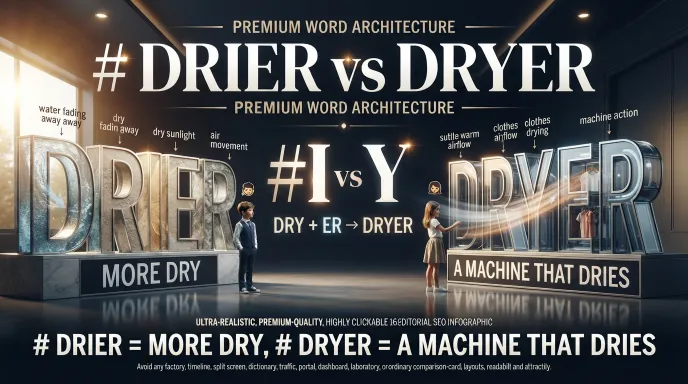
Drier or dryer? Both words are correct, but they usually have different meanings. Drier is commonly the comparative form of dry, meaning more dry.
Dryer usually refers to a machine or device that removes moisture, such as a clothes dryer or hair dryer.
For example, you can say, “The weather is drier today,” but “Put the clothes in the dryer.” The two words sound the same, yet their spelling changes according to their grammatical role and meaning.
People often search for drier or dryer because English spelling rules can be confusing. Both forms are accepted words, and both are connected to the idea of dryness.
The challenge is knowing when you are comparing something and when you are referring to a machine.
This guide explains the difference between drier and dryer, including their meanings, usage, common mistakes, British and American English preferences, everyday examples, and easy memory tips.
Drier or Dryer: The Quick Answer You Need
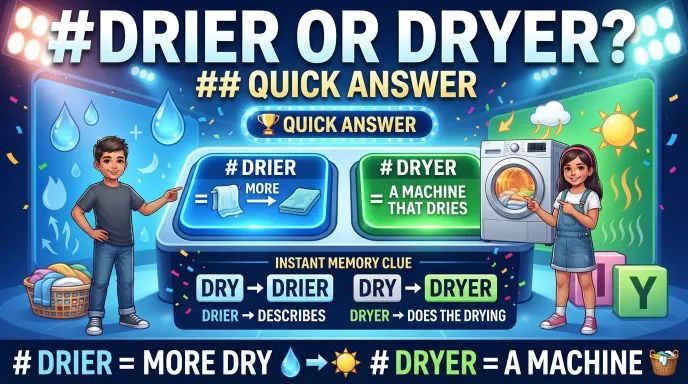
Use “drier” when comparing something that is dry. Use “dryer” when referring to a machine, device, or person that dries something.
Quick examples
- The climate is drier this year. ✅
- My hair is drier in winter. ✅
- Put the clothes in the dryer. ✅
- I bought a new hair dryer. ✅
Easy rule:
- Drier = more dry
- Dryer = a thing or person that dries
Drier or Dryer: Quick Answer
The easiest way to choose between these two words is to check the meaning.
Use drier for comparison
Drier means more dry.
The desert is drier than the forest.
My skin feels drier in cold weather.
This towel is drier now.
Use dryer for a machine or device
Dryer usually means something that dries.
The clothes are in the dryer.
She bought a new hair dryer.
The hand dryer is broken.
Simple check: If you can replace the word with more dry, use drier. If you mean a machine or tool, use dryer.
What Does Drier or Dryer Mean?
What does “drier” mean?
Drier is commonly the comparative form of the adjective dry.
It means:
- More dry
- Having less moisture
- Less wet
Examples:
Today is drier than yesterday.
The western region is drier than the coast.
My hands become drier during winter.
The word compares one thing with another.
What does “dryer” mean?
Dryer is commonly a noun. It refers to something that removes moisture.
Examples include:
- clothes dryer
- hair dryer
- hand dryer
- industrial dryer
Examples:
The dryer stopped working.
Use a hair dryer to dry your hair.
The hand dryer is near the sink.
Can “dryer” mean more dry?
Yes, dryer can also appear as a comparative spelling in some usage, but drier is generally preferred when you mean more dry in standard edited writing.
For maximum clarity, use:
drier = comparative adjective
dryer = machine or device
The Origin of Drier or Dryer
Both words come from the English word dry.
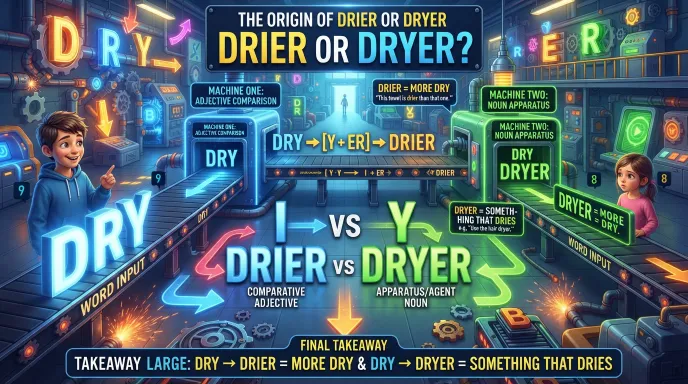
English forms comparatives by adding er to many short adjectives. When dry becomes a comparative adjective, the final y changes to i, producing:
dry → drier → driest
This follows the same spelling pattern seen in:
- happy → happier
- easy → easier
- busy → busier
The noun dryer developed from the verb dry with the ending er, which often refers to a person or thing that performs an action.
For example:
- teach → teacher
- wash → washer
- dry → dryer
This explains the useful distinction:
- drier follows the comparative adjective spelling pattern.
- dryer follows the noun pattern for something that dries.
British English vs American English
Both British and American English generally recognize the same distinction.
| Usage | British English | American English | Example |
| Comparative of dry | drier | drier | The weather is drier today. |
| Appliance | dryer | dryer | The clothes are in the dryer. |
| Hair appliance | hair dryer | hair dryer | I need a new hair dryer. |
| Superlative | driest | driest | It was the driest month. |
Regional differences
There is no major BritishversusAmerican difference in the basic spelling rule.
Both varieties commonly use:
- drier for more dry
- dryer for a device that dries
The same distinction is useful in Canadian, Australian, and international English.
Which Version Should You Use?
United States
Use drier for comparison.
This climate is drier.
Use dryer for a machine.
The clothes dryer is running.
United Kingdom
The same rule generally applies.
The air becomes drier during summer.
Put the clothes in the dryer.
Some British speakers may more commonly say tumble dryer when referring to a clothes dryer.
Canada
Use:
drier = more dry
dryer = machine that dries
Australia
The same distinction applies.
The region is becoming drier.
The dryer needs repair.
International writing
For maximum clarity:
- Use drier when comparing dryness.
- Use dryer when naming a machine or device.
Academic writing
Use drier when comparing moisture levels.
The samples became drier over time.
Use dryer for equipment.
The material was placed in a laboratory dryer.
Business writing
Use the form that clearly matches the meaning.
The climate is becoming drier.
The company installed a new industrial dryer.
Common Mistakes
Mistake 1: Writing “dryer” when comparing dryness
Less preferred:
The weather is dryer today.
Preferred:
The weather is drier today.
Explanation: Drier is the standard comparative form of dry.
Memory tip: Dry → drier, just like happy → happier.
Mistake 2: Writing “drier” for a machine
Incorrect:
Put the clothes in the drier.
Correct:
Put the clothes in the dryer.
Explanation: A dryer is something that performs the action of drying.
Mistake 3: Confusing comparative and noun forms
Compare:
The towel is drier now.
Put the towel in the dryer.
One describes the towel. The other names the machine.
Mistake 4: Forgetting the spelling change
When forming the comparative of dry, the y changes to i:
dry → drier
This follows a common English spelling pattern.
Everyday Examples
Emails
The weather should be drier tomorrow.
Please remove the clothes from the dryer.
Business writing
The storage area must remain drier during winter.
The company purchased an industrial dryer.
News headlines
Drier Conditions Expected This Summer
New Dryer Technology Reduces Energy Use
Blogs
How to Keep Your Skin Hydrated in Drier Weather
How to Choose the Best Clothes Dryer
Social media
Hoping for drier weather this weekend! ☀️
Finally fixed my broken dryer! 🎉
Academic writing
The treated samples were significantly drier than the untreated samples.
The material was placed in a controlled dryer.
Daily conversation
Is it drier outside today?
Did you put the clothes in the dryer?
Google Trends & Modern Usage
The keyword drier or dryer is commonly searched because both words are pronounced the same and come from the word dry.
Common related searches include:
- drier vs dryer
- drier or dryer spelling
- is it drier or dryer weather
- drier meaning
- dryer meaning
- hair dryer or hair drier
- weather is drier or dryer
- dry comparative form
The search intent is informational, educational, and comparisonbased.
The confusion is common because both spellings can look reasonable. However, modern standard usage makes the difference easy to understand when grammar is considered.
Use drier when describing a comparative condition. Use dryer when naming a person, machine, or device that performs the action of drying.
Exact Google Trends statistics are not included because this article does not rely on verified live search data. The discussion is based on standard spelling patterns and general modern English usage.
Quick Comparison Table
| Version | Meaning | Correct? | Region | Example |
| drier | More dry | ✅ Yes | International | The air is drier today. |
| dryer | Machine or device that dries | ✅ Yes | International | Put the clothes in the dryer. |
| hair dryer | Device for drying hair | ✅ Yes | International | She bought a hair dryer. |
| drier machine | Incorrect in this meaning | ❌ No | International | Use “dryer.” |
| drier weather | More dry weather | ✅ Yes | International | We expect drier weather. |
Key Takeaways
- Drier means more dry.
- Dryer usually means a machine or device that dries.
- Use drier when comparing moisture or dryness.
- Use dryer for clothes dryers, hair dryers, and hand dryers.
- Dry → drier follows a common comparative spelling rule.
- Both British and American English generally use this distinction.
- Ask whether you are describing something or naming a machine.
- More dry = drier. Machine = dryer.
FAQs
Is it drier or dryer?
Both are correct, but they usually have different meanings. Drier means more dry and is used for comparison. Dryer usually refers to a machine, device, or person that dries something.
Is it drier or dryer weather?
The preferred spelling is drier weather because you are comparing the amount of dryness. The word means more dry, which makes drier the standard comparative form.
Is it drier or dryer hair?
Use drier when comparing how dry the hair is. For example, “My hair feels drier in winter.” Use dryer when referring to the appliance, as in “I used a hair dryer.”
Why does dry become drier?
When forming the comparative of many words ending in a consonant plus y, English changes the y to i before adding er. Therefore, dry becomes drier, similar to happy becoming happier.
Is a hair dryer or hair drier correct?
The standard term for the appliance is hair dryer. The word dryer refers to a device that performs the action of drying. Hair drier is not the usual spelling for the appliance.
Is it clothes dryer or clothes drier?
The standard name for the appliance is clothes dryer. In British English, tumble dryer is also a common term. Use drier when comparing dryness, not when naming the machine.
Can dryer mean more dry?
Some usage may show dryer as a comparative spelling, but drier is generally preferred in standard edited writing when you mean more dry. Using drier also avoids confusion with a drying machine.
What is the superlative form of dry?
The standard superlative form is driest.
For example:
This was the driest month of the year.
The spelling follows the same pattern as dry → drier → driest.
How can I remember drier vs dryer?
Remember the grammar. Drier describes a condition and means more dry. Dryer names something that dries. A simple memory rule is: The weather gets drier, but the clothes go in the dryer.
Is there a British and American spelling difference?
No major difference exists in the basic rule. Both British and American English generally use drier for the comparative form and dryer for a machine or device that dries.
Conclusion
The difference between drier or dryer is easy once you focus on grammar and meaning. Drier is the comparative form of dry.
so it means more dry. Use it when comparing weather, skin, air, towels, soil, or any other condition involving moisture.
Dryer, on the other hand, is usually a noun. It refers to a machine or device that removes moisture, such as a clothes dryer, hair dryer, hand dryer, or industrial dryer.
Both words are correct, but they belong in different situations. If you are describing something as having less moisture, choose drier. If you are naming something that performs the action of drying, choose dryer.
Easy rule to remember: The weather becomes drier, but your clothes go in the dryer.
DISCOVER MORE ARTICLE HERE!
- Colon or Semicolon: What’s the Difference?
- Nosey or Nosy: Which Spelling Is Correct?
- Benefitting or Benefiting? Which Spelling Is Correct?

I’m Orin Blake, a writer with a passion for making English grammar simple, practical, and easy to understand. I enjoy breaking down confusing words, spelling differences, and everyday language questions into clear, reader-friendly guides. My goal is to help students, professionals, and curious learners write with greater confidence and accuracy.