Have you ever paused while writing and wondered if it should be canceled or cancelled? You’re not alone.
Every month, thousands of people search for “canceled or cancelled” because both spellings appear in books, newspapers, websites, emails, and official documents.
This often creates confusion for students, professionals, bloggers, and English learners who want to write correctly.
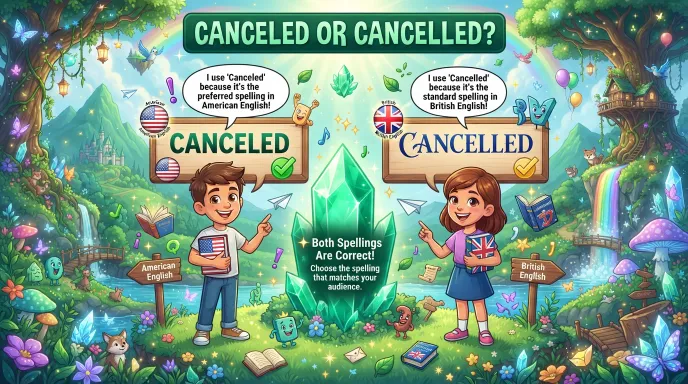
The good news is that both “canceled” and “cancelled” are correct. The difference depends on the variety of English you are using.
American English prefers canceled, while British English and most Commonwealth countries prefer cancelled.
Neither spelling is wrong, but using the version that matches your audience makes your writing more natural and professional.
In this guide, you’ll learn the history behind both spellings, understand the differences between British and American English, discover common mistakes to avoid, see practical examples, and find out which spelling is best for your audience.
By the end, you’ll be able to use canceled or cancelled with complete confidence.
Canceled or Cancelled 😀 Quick Answer
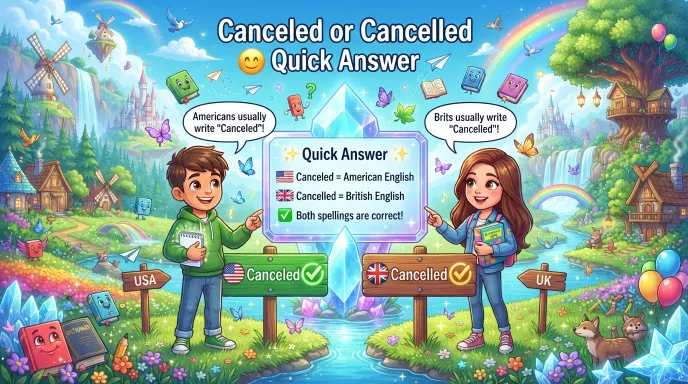
Both spellings are correct, but they are used in different forms of English.
- Canceled ✅ = Preferred in American English
- Cancelled ✅ = Preferred in British English
- Choose the spelling that matches your audience and use it consistently.
Examples
American English
- The meeting was canceled.
- Our flight has been canceled.
British English
- The meeting was cancelled.
- Our flight has been cancelled.
Quick Tip
If you’re writing for readers in the United States, use canceled. If your audience is in the UK, Australia, or other Commonwealth countries, use cancelled.
The Origin of Canceled or Cancelled
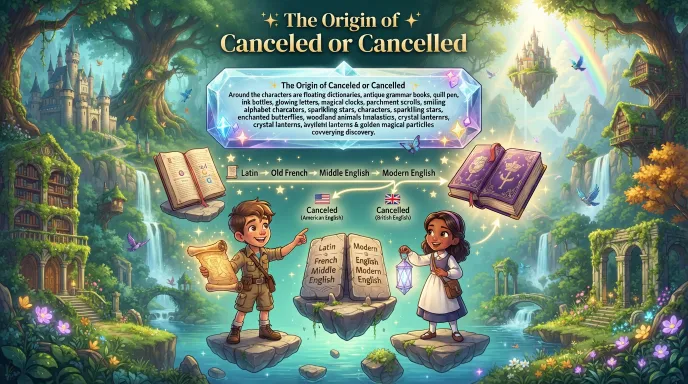
The word cancel comes from the Latin word cancellare, meaning “to cross out” or “to erase.” It entered English through Old French and has been used for centuries in legal, business, and everyday communication.
The spelling difference developed because British and American English follow different conventions when adding suffixes to verbs ending in -l.
British English usually doubles the final l before adding -ed or -ing.
Examples:
- travel → travelled
- cancel → cancelled
American English generally keeps a single l when the final syllable is not stressed.
Examples:
- travel → traveled
- cancel → canceled
This spelling difference is part of a broader pattern found in many English words.
British English vs American English Spelling
Although both spellings are accepted, different regions prefer different versions.
Comparison Table
| Feature | British English | American English |
| Preferred spelling | Cancelled | Canceled |
| Past tense | Cancelled | Canceled |
| Past participle | Cancelled | Canceled |
| Present participle | Cancelling | Canceling |
| Common regions | UK, Australia, New Zealand, Ireland | United States |
Examples
British English
- The concert was cancelled.
- The reservation has been cancelled.
American English
- The concert was canceled.
- The reservation has been canceled.
Which Spelling Should You Use?
The right spelling depends on your audience.
Use Canceled if:
- You are writing for an American audience.
- You follow American English.
- You use AP Style.
- Your website targets readers in the United States.
Use Cancelled if:
- Your audience is in the United Kingdom.
- You write for Australia, New Zealand, or Ireland.
- You follow British English spelling rules.
For International Content
Either spelling is correct. The most important rule is to choose one version and use it consistently throughout your content.
Common Mistakes with Canceled or Cancelled
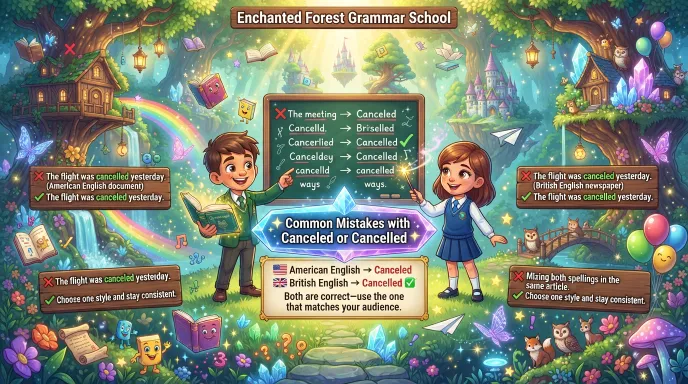
Many writers make small but common mistakes.
Mixing Both Spellings
❌ The event was canceled, but the notice says it was cancelled.
✅ Choose one spelling style and use it consistently.
Using British Spelling for US Readers
❌ The flight was cancelled.
✅ The flight was canceled.
Using American Spelling for UK Readers
❌ The train was canceled.
✅ The train was cancelled.
Forgetting the Present Participle
American English:
- canceling
British English:
- cancelling
Canceled or Cancelled in Everyday Examples
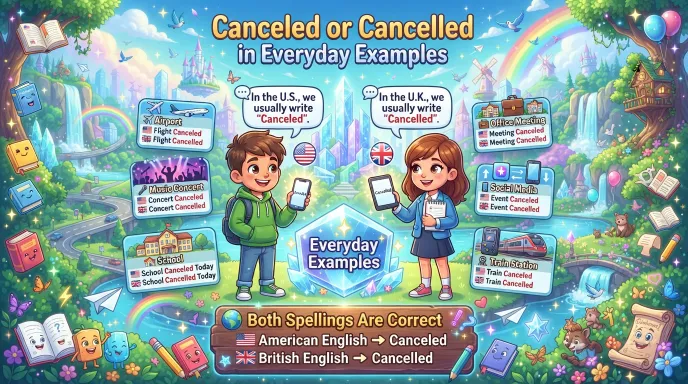
American English
Your appointment has been canceled.
British English
Your appointment has been cancelled.
News
American English
The airline canceled all flights because of bad weather.
British English
The railway company cancelled several services due to heavy rain.
Social Media
American English
Tonight’s livestream has been canceled.
British English
Tonight’s livestream has been cancelled.
Formal Writing
American English
The conference was canceled due to severe weather.
British English
The conference was cancelled following safety concerns.
Canceled or Cancelled : Google Trends & Usage Data
Search interest for “canceled or cancelled” remains consistently high because both spellings appear across websites, books, and official documents.
Popular by Country
| Country | Preferred Spelling |
| United States | Canceled |
| United Kingdom | Cancelled |
| Australia | Cancelled |
| Canada | Cancelled (more common) |
| New Zealand | Cancelled |
| India | Cancelled is generally more common |
People usually search this keyword when they are:
- Writing emails
- Editing blog posts
- Completing assignments
- Publishing articles
- Learning English grammar
Comparison Table
| Feature | Canceled | Cancelled |
| Correct spelling | ✅ Yes | ✅ Yes |
| English Type | American | British |
| Double L | No | Yes |
| Used in the USA | ✅ Very Common | Rare |
| Used in the UK | Rare | ✅ Very Common |
| Used in Australia | Rare | ✅ Very Common |
| Used in Canada | Sometimes | Common |
| Best for | United States | UK & Commonwealth |
Frequently Asked Questions
Is canceled or cancelled correct?
Both are correct. Canceled is preferred in American English, while cancelled is preferred in British English.
Which spelling is used in the United States?
American English uses canceled.
Which spelling is used in the United Kingdom?
British English prefers cancelled.
Is “canceling” also spelled differently?
Yes. American English uses canceling, while British English uses cancelling.
Can I use both spellings in one article?
No. Choose one spelling style and use it consistently.
Does Google recognize both spellings?
Yes. Google recognizes both because both are correct English spellings.
Which spelling is more common worldwide?
Cancelled is generally more common worldwide because it is used across the UK and many Commonwealth countries, while canceled dominates in the United States.
Conclusion
The difference between canceled and cancelled is based on regional spelling conventions rather than grammar.
Both spellings are correct and accepted by major dictionaries and style guides. If your audience is in the United States, canceled is the standard choice.
If your readers are in the United Kingdom, Australia, New Zealand, Canada, or other Commonwealth countries, cancelled is generally preferred.
The key to professional writing is consistency. Once you choose either canceled or cancelled, use that spelling throughout your article, email, report, or website.
Doing so improves readability and creates a polished, professional impression. By understanding the difference and matching your spelling to your audience, you can write with confidence in any personal, academic, or professional setting.

I’m Orin Blake, a writer with a passion for making English grammar simple, practical, and easy to understand. I enjoy breaking down confusing words, spelling differences, and everyday language questions into clear, reader-friendly guides. My goal is to help students, professionals, and curious learners write with greater confidence and accuracy.