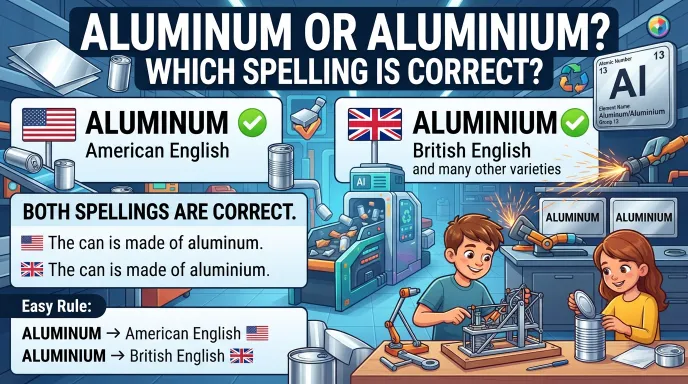
Both “aluminum” and “aluminium” are correct; “aluminum” is American English, while “aluminium” is British English.Have you ever wondered if the correct spelling is aluminum or aluminium? Both forms are correct, but the preferred spelling depends on the variety of English you use.
This difference often confuses students, writers, and English learners because the two words refer to the same chemical element but have different spellings.
Aluminum is the standard spelling in American English, while aluminium is the standard spelling in British English and many other varieties of English. Both words refer to the lightweight metal with the chemical symbol Al and atomic number 13.
For example, an American writer might say, “The can is made of aluminum,” while a British writer would usually write, “The can is made of aluminium.”
Neither spelling is wrong. The key is to match your spelling to your audience and remain consistent throughout your writing.
Aluminum or Aluminium : Quick Answer
Both spellings are correct:
- Aluminum ✅ — American English
- Aluminium ✅ — British English and many Commonwealth varieties
Examples
American English:
The frame is made of aluminum.
British English:
The frame is made of aluminium.
Quick Tip
Aluminum = American English
Aluminium = British English
The Origin of Aluminum or Aluminium
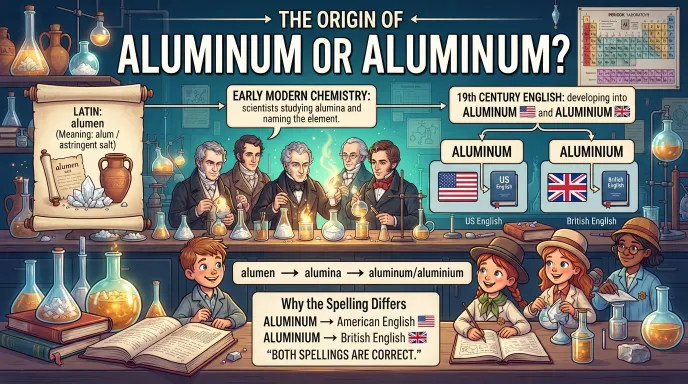
The name comes from alum, a mineral compound known for centuries.
The English chemist Humphry Davy used forms of the name in the early 19th century. The spelling developed in more than one form.
The -ium ending became established in British English as aluminium. In the United States, aluminum became the preferred spelling.
This is why the two forms exist today.
British English vs American English Spelling
| Feature | British English | American English |
| Preferred spelling | Aluminium | Aluminum |
| Chemical symbol | Al | Al |
| Atomic number | 13 | 13 |
| Meaning | Same metal | Same metal |
British English
The aircraft uses aluminium components.
American English
The aircraft uses aluminum components.
Which Spelling Should You Use?
Choose the form that matches your audience.
Use “Aluminum” for American English
Use aluminum when writing for an American audience.
Examples:
- aluminum foil
- aluminum can
- aluminum frame
- aluminum alloy
Use “Aluminium” for British English
Use aluminium when writing in British English.
Examples:
- aluminium foil
- aluminium can
- aluminium frame
- aluminium alloy
For Global Websites
If your content follows American English, use aluminum consistently. If it follows British English, use aluminium.
Both forms are widely understood.
Common Mistakes with Aluminum or Aluminium
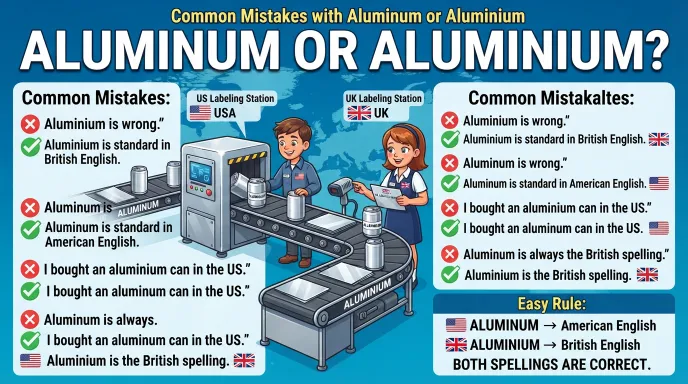
Mistake 1: Calling One Form Incorrect
❌ Aluminium is always wrong.
❌ Aluminum is always wrong.
✅ Both are correct regional spellings.
Mistake 2: Mixing English Styles
Avoid switching between aluminum and aluminium without a reason.
Choose one form based on your target audience.
Mistake 3: Confusing the Chemical Symbol
Both spellings use the same chemical symbol:
Al
The spelling does not change the element or its properties.
Aluminum or Aluminium in Everyday Examples
American:
Please use an aluminum frame for the project.
British:
Please use an aluminium frame for the project.
News
American:
The company announced a new aluminum product.
British:
The company announced a new aluminium product.
Social Media
This aluminum/aluminium bottle is very light.
Formal Writing
American:
The study examines the properties of aluminum alloys.
British:
The study examines the properties of aluminium alloys.
Aluminum or Aluminium : Google Trends & Usage Data
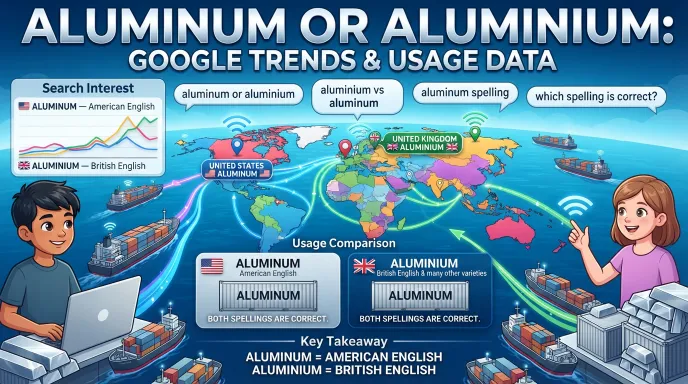
Searches for “aluminum or aluminium” are common because both spellings are widely used in different English-speaking regions.
Generally:
- Aluminum is strongly associated with American English.
- Aluminium is strongly associated with British English.
- Aluminium is also common in many Commonwealth countries.
Search popularity varies by country and time, so exact Google Trends results depend on the selected region and date range.
Comparison Table
| Word | British English | American English | Meaning |
| Aluminium | ✅ Preferred | Less common | Chemical element |
| Aluminum | Less common | ✅ Preferred | Chemical element |
| Symbol | Al | Al | Same |
| Atomic number | 13 | 13 | Same |
FAQs
Is aluminum or aluminium correct?
Both are correct. Aluminum is the American English spelling, while aluminium is the British English spelling.
Is aluminium British English?
Yes. Aluminium is the standard British English form.
Is aluminum American English?
Yes. Aluminum is the standard American English form.
Do aluminum and aluminium mean the same thing?
Yes. They refer to the same chemical element.
Which spelling should I use for a US audience?
Use aluminum.
Which spelling should I use for a UK audience?
Use aluminium.
Is aluminium used outside the UK?
Yes. Aluminium is also widely used in many Commonwealth countries and other regions that follow British English conventions.
Conclusion
Both aluminum and aluminium are correct spellings for the same chemical element. The main difference is regional.
Aluminum is the standard spelling in American English, while aluminium is the standard form in British English and many Commonwealth varieties.
The element is the same in both cases. It has the chemical symbol Al and atomic number 13, so the spelling does not change its meaning or scientific identity.
If you are writing for an American audience, choose aluminum. If you are writing for a British or Commonwealth audience, choose aluminium.
For content, both spellings can be useful because readers in different countries may search for different forms.
The most important rule is consistency: choose the spelling that fits your audience and use it throughout your content.
DISCOVER MORE ARTICLE HERE!
- Alot or A Lot? Which Spelling Is Correct?
- Fourty or Forty? Which Spelling Is Correct?
- Cannot or Can Not? Which Spelling Is Correct?

I’m Orin Blake, a writer with a passion for making English grammar simple, practical, and easy to understand. I enjoy breaking down confusing words, spelling differences, and everyday language questions into clear, reader-friendly guides. My goal is to help students, professionals, and curious learners write with greater confidence and accuracy.